De la roche au produit, tracé
The Materials Atlas
Matériaux Mines et gisements Traitement et affinage Parcours de garde à vue Chaînes d'approvisionnement Entreprises Pays Actualités
Matériaux par rayon Matériaux de batteries Éléments de terres rares Cuivre et électricité Matériaux pour semiconducteurs Matières nucléaires Aérospatiale & Défense Métaux précieux Acier et métaux d'alliage Minéraux industriels Minéraux agricoles Matières premières énergétiques Minéraux menants Tableau périodique
Demande Marchés finaux Technologies Calculateur de matériaux Cartes Filtre de sélection
Apprendre & outils ApprendreGlossaire Interroger les donnéesAgents IA Recherche et donnéesAPI ★ Enregistré
À propos À notre sujetMéthodologie Sources des donnéesContact Avertissement
Options de lecture
🧭 Vue guidée Nouveau dans ce domaine — teneurs en minerai, concentré, affinage, sous-produits ? Nous expliquons chaque terme au fil de votre navigation, en langage clair. Les mêmes données, avec l'aide intégrée.
⚡ Vue expert Vous connaissez déjà le secteur. Uniquement les données — claires, rapides et compactes, sans explications supplémentaires. Il s'agit de l'affichage par défaut.
Thème
Langue de l'interface
Profondeur Les pages matériaux sont rédigées à quatre niveaux. Choisissez-en un sur n'importe quelle page matériau et il est mémorisé.
★ Enregistré Recherche et données
Pilbara iron ore to Chinese steel

Parcours de garde à vue · commence en Australia

Pilbara iron ore to Chinese steel

The largest material flow on Earth: dig it, crush it, screen it, and put it on a boat.

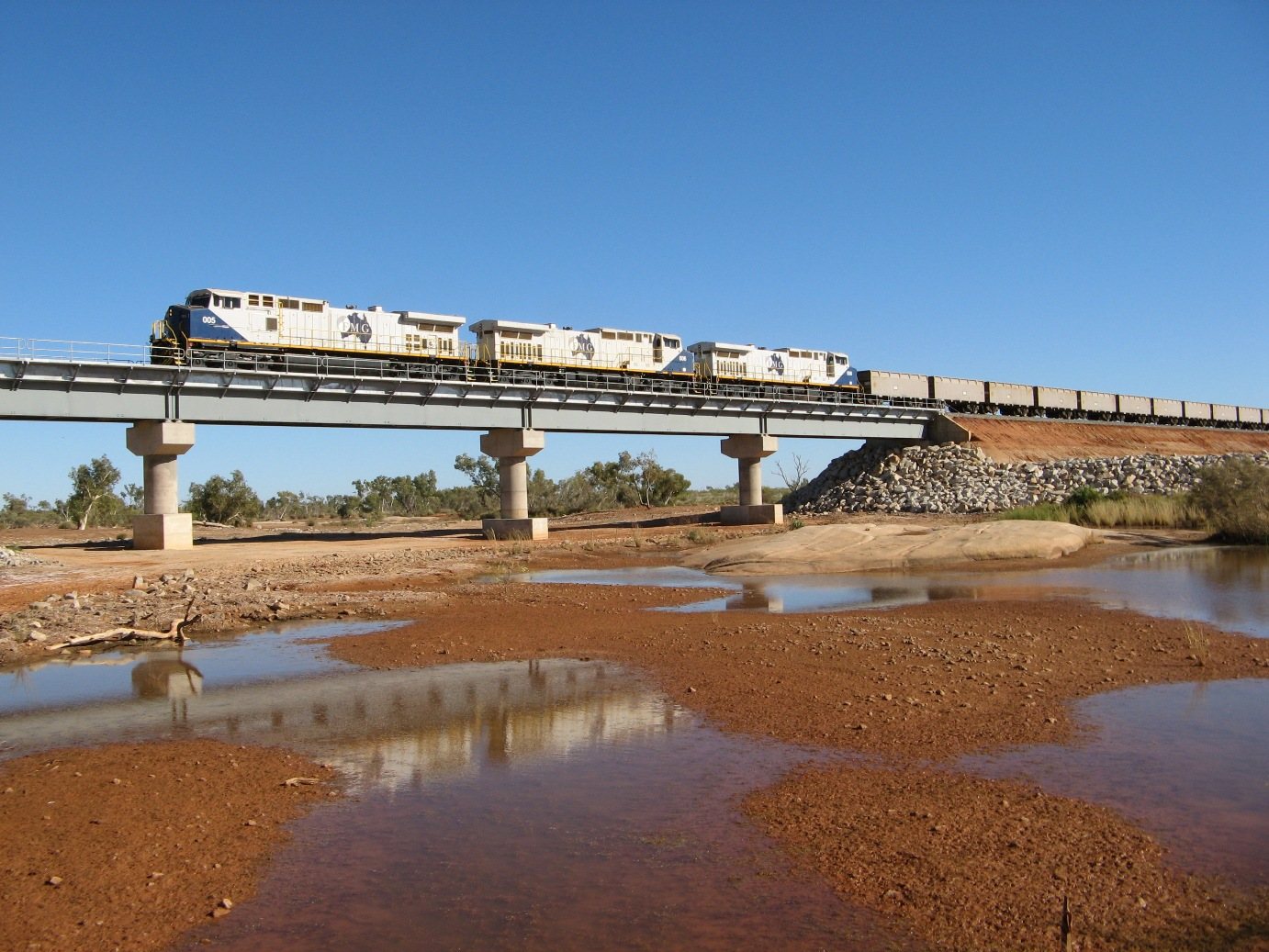
FMG Iron Ore Train -2008 · Geez-oz · CC BY-SA 3.0 · Wikimedia Commons
1,000 tonnes of iron ore as mined
620 tonnes of crude steel
Australia → China · Rail then Capesize Australia — Blast, load, haul 1 Australia China — Rail, port, Capesize 2 China
Numérotés dans l'ordre de déplacement du matériau. Cliquez sur un pays pour ouvrir sa page. Projection équirectangulaire établie à partir des centroïdes des pays — les arcs indiquent quelles frontières sont franchies, et non la route maritime réelle.

Ce qui se déplace réellement

Pilbara hematite is rich enough to ship almost as it comes out of the ground. There is no flotation, no smelting, no chemistry at the mine — just crushing and screening, a private heavy-haul railway and a purpose-built port. All the transformation happens on another continent.

Le matériau
Iron Ore
La variété
Direct-shipping hematite fines, around 62% iron
Où cela commence
Australia — The Pilbara, where banded iron formation was laid down over two billion years ago
Pourquoi cet itinéraire et pas un autre. Direct-shipping ore is the exception in mining: the rock is already good enough. That is why the Pilbara moves more tonnage than any other district and why the value added in Australia per tonne is so small.
Le maillon le plus étroit. Coking coal, oddly enough. The blast furnace needs carbon as a chemical reductant, not just as fuel, and that is the hardest part of steel to replace.
Lisez les deux chiffres à chaque étape : ce qui est entré, et ce qui est sorti. Les voir diminuer est l'essentiel. À la fin, vous aurez suivi un millier de tonnes de roche jusqu'à quelques kilogrammes de la substance qui fait réellement le travail.

Étape par étape, et frontière par frontière

01 Extraction 1,000tonnes

Australia · Pilbara, Western Australia détenu par Rio Tinto, BHP, FMG and others (Mineur)

Blast, load, haul

Enriched hematite is drilled, blasted and hauled — much of it by autonomous trucks and driverless trains.

1,000 tonnesore 1,000 tonnesore to the crusher

Pourquoi ici: Weathering leached the silica out of ancient banded iron formation and left almost pure hematite behind.
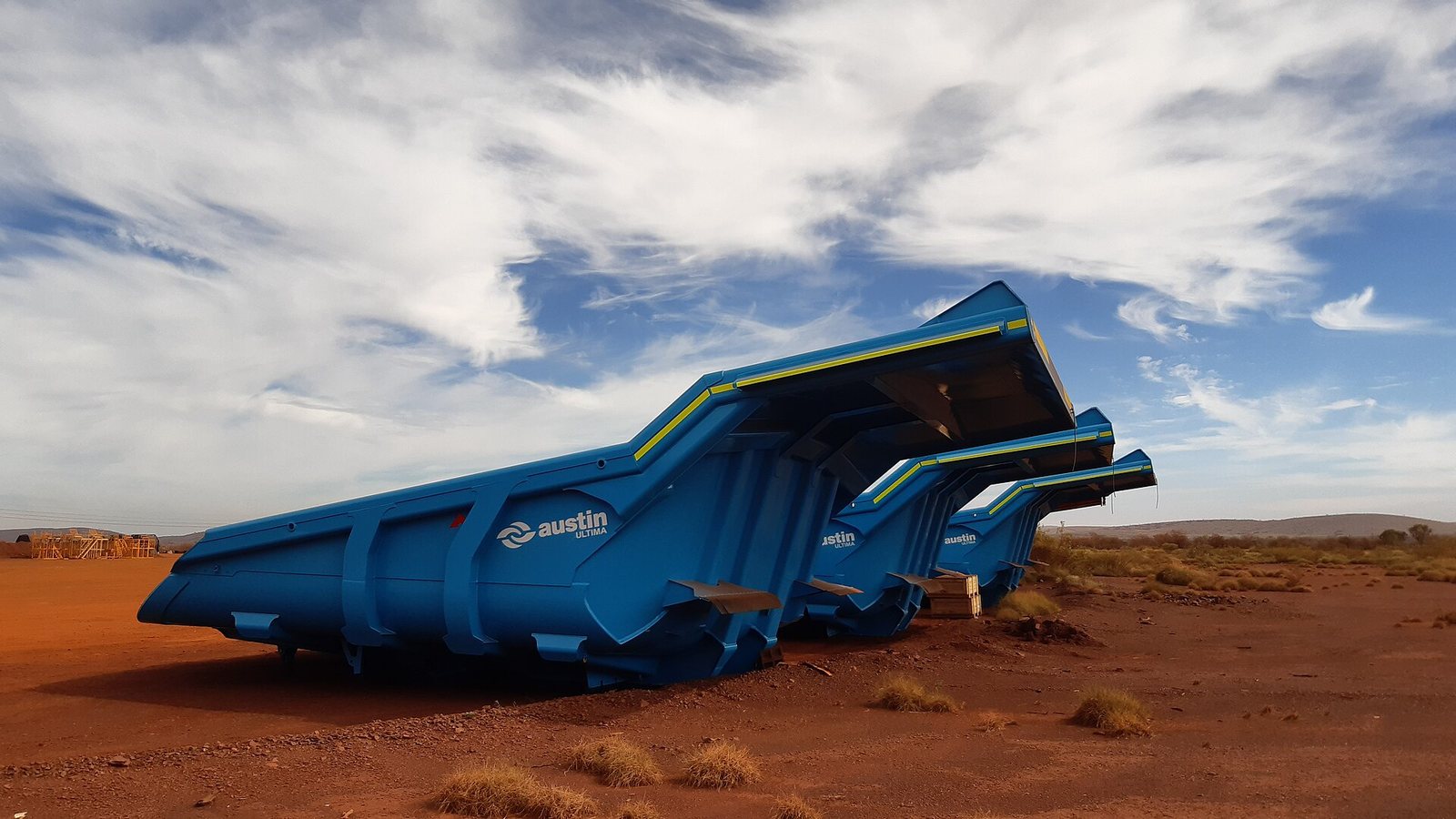
Blast, load, haul
Haul truck trays to be fitted at the Br… · CC BY-SA 4.0 via Wikimedia Commons
02 Préparation 990tonnes

Australia · Mine-site plant détenu par Miners (Mineur)

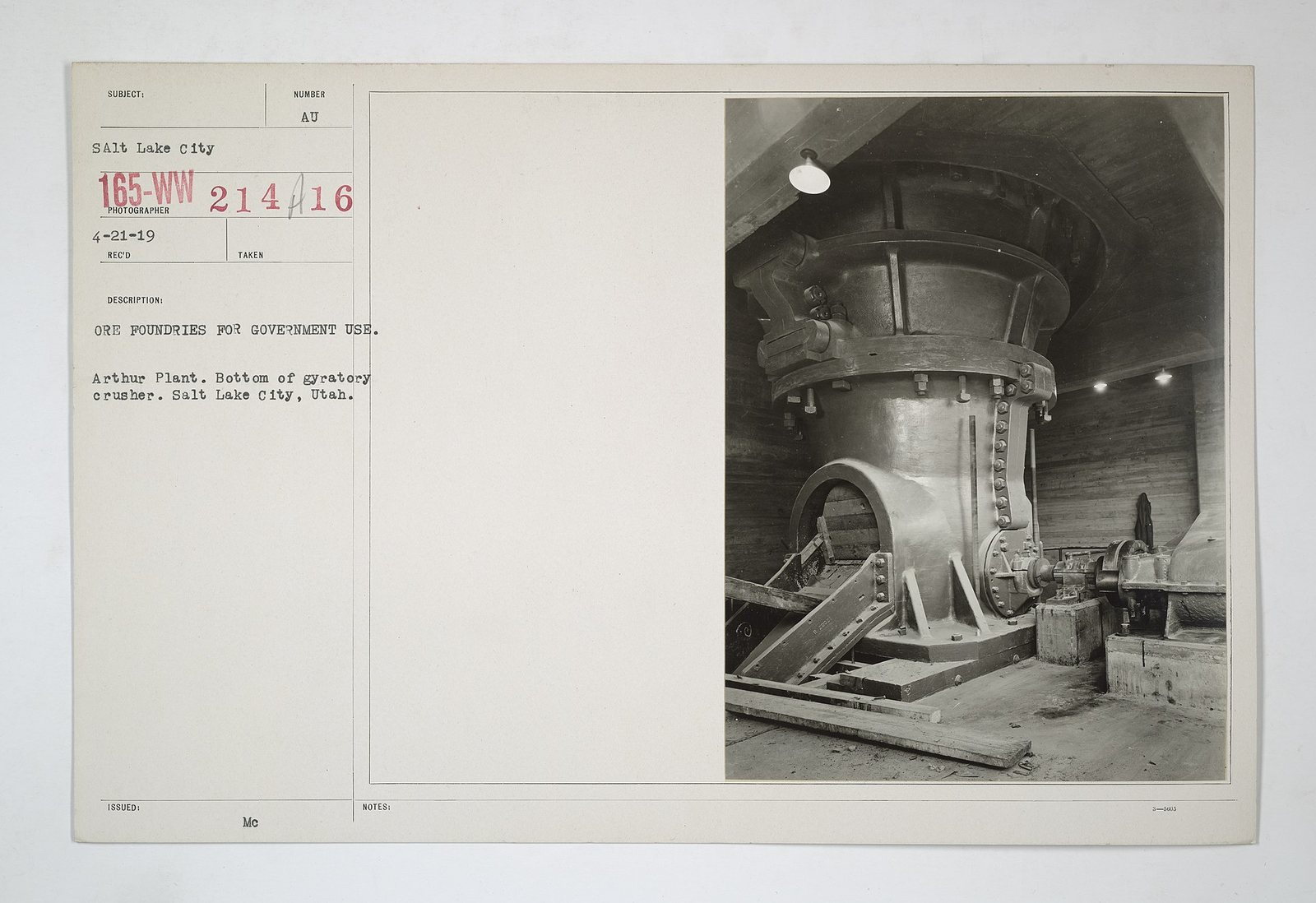
Crush and screen. That is all.

Crushed and screened into lump and fines. No concentration is needed — the ore is already close to a saleable grade.

1,000 tonnesore 990 tonneslump and fines

Ce qu'il est advenu du reste: Almost nothing is discarded. Compare that with copper, where 984 tonnes in 1,000 go to tailings.

Pourquoi ici: Where the ore is good enough to ship, nobody builds a plant.
hours Hematite →
Crush and screen. That is all.
Industries of War - Metals - Iron - Ore… · Public domain via Wikimedia Commons
03 Transport 990tonnes

China · Port Hedland to Chinese mills détenu par Miners and steelmakers (Négociant)

Rail, port, Capesize

Trains up to 2.5 km long run to a private port, and Capesize bulkers sail to China. This is the highest-tonnage trade route on the planet.

990 tonnesore 990 tonnesdelivered

Pourquoi ici: The steel mills are in Asia and the ore is in Australia. The whole business is logistics.
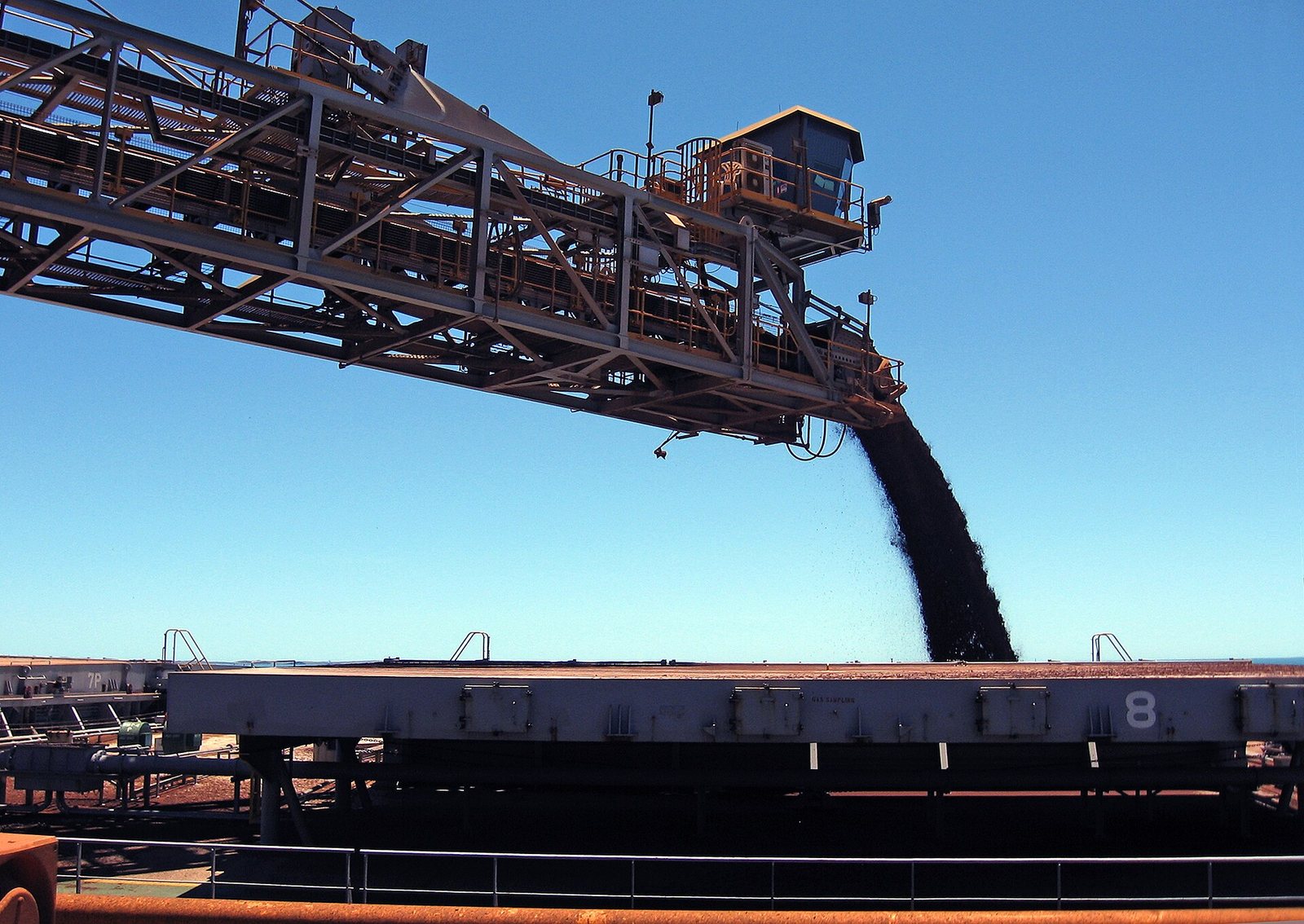
Rail then Capesize · ~2 weeks at sea ~2 weeks Port Hedland →
Rail, port, Capesize
CSIRO ScienceImage 11678 A Rio Tinto ir… · CC BY 3.0 via Wikimedia Commons
04 Traitement 640tonnes

China · Integrated steelworks détenu par Steelmaker (Fabricant)

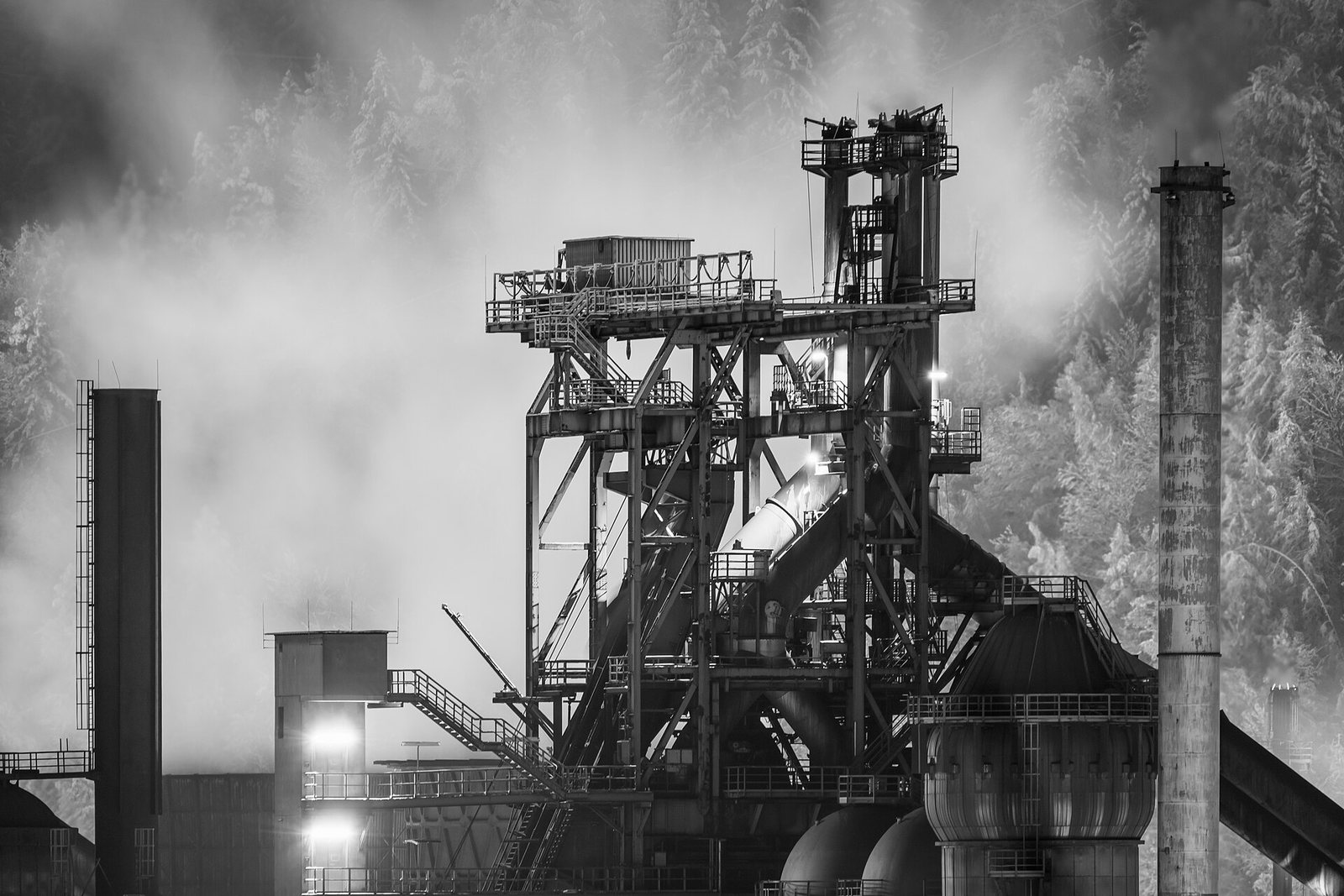
Sinter, coke, and a blast furnace

Fines are sintered into lumps; coking coal is baked into coke. In the furnace the carbon strips the oxygen off the iron oxide — a chemical reaction, not just heat.

990 tonnesiron ore 640 tonneshot metal

Ce qu'il est advenu du reste: Roughly 500 kg of coking coal per tonne of hot metal, and the CO2 that comes with it. This reaction is why steel is hard to decarbonise.

Pourquoi ici: Integrated steelworks sit next to ports and next to demand.
La voie non empruntée The other great bulk trade Same shape, different metal, and a different reason the value is added abroad.
Sinter, coke, and a blast furnace
DSC03739 Blast Furnace 1 at Night, voes… · CC BY 4.0 via Wikimedia Commons
05 Composant 620tonnes

China · Basic oxygen furnace détenu par Steelmaker (Fabricant)

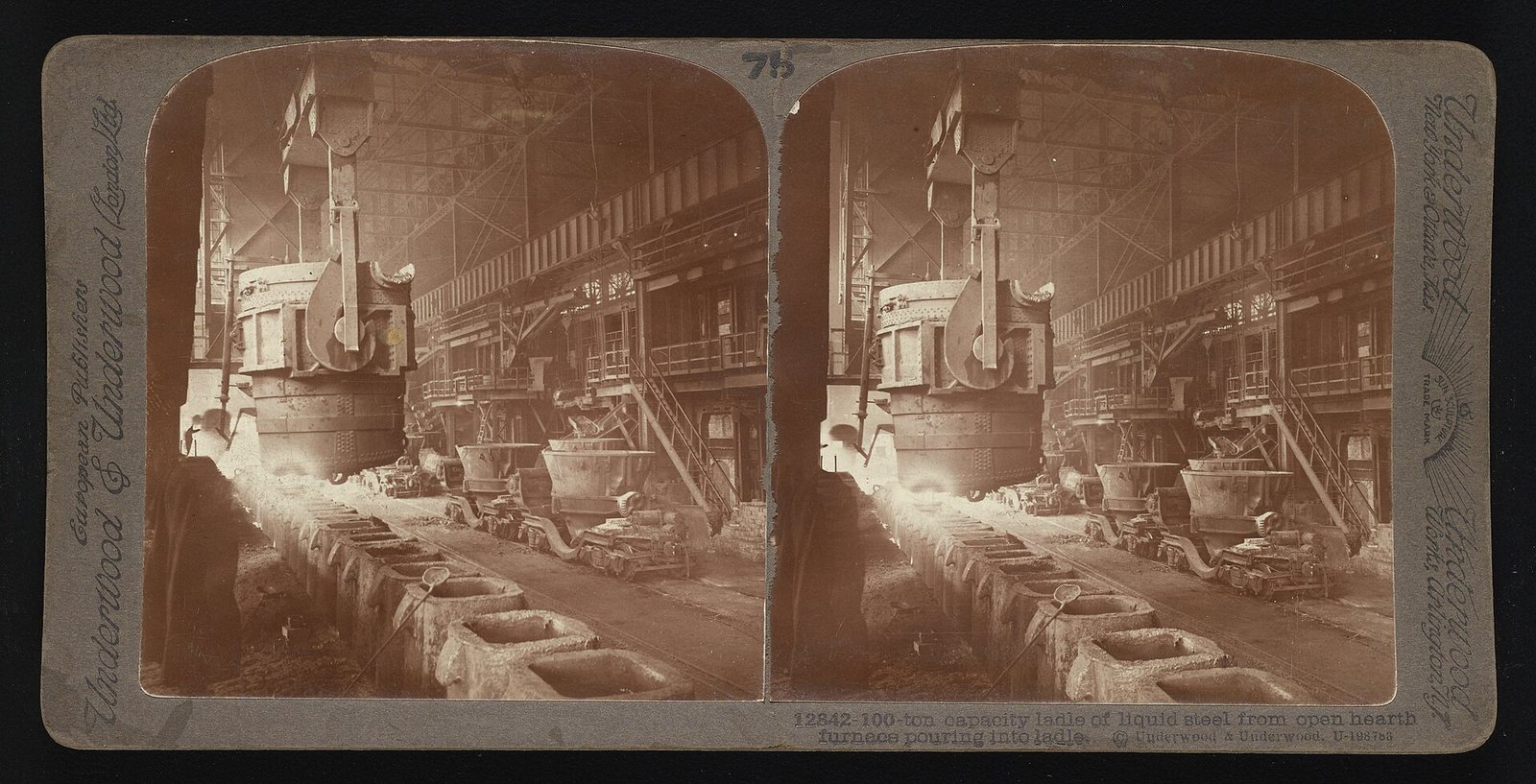
Blowing the carbon back out

Oxygen is blown through the hot metal to burn the carbon down to a few tenths of a percent. Manganese goes in — every tonne of steel needs some — and then whatever else the grade calls for: chromium, nickel, niobium, vanadium.

640 tonneshot metal 620 tonnescrude steel

Pourquoi ici: Steel is the alloy where a dozen other materials in this atlas quietly end up.

under an hour Manganese →
Blowing the carbon back out
100-ton capacity ladle of liquid steel … · Public domain via Wikimedia Commons
06 Marché final 620tonnes

China · Rolling mills détenu par Fabricators (Fabricant)

Buildings, cars, rail, ships

Cast, rolled and cut. 620 tonnes of steel is roughly the frame of a mid-rise building, or five hundred cars.

620 tonnescrude steel 620 tonnesin service, and recyclable

Ce qu'il est advenu du reste: Steel made from scrap in an electric arc furnace emits a fraction of this route's carbon. How fast steel can decarbonise depends on how much scrap exists — and you cannot recycle steel that has not been built yet.

Pourquoi ici: Two countries, one ocean, and by weight the largest thing humans move.
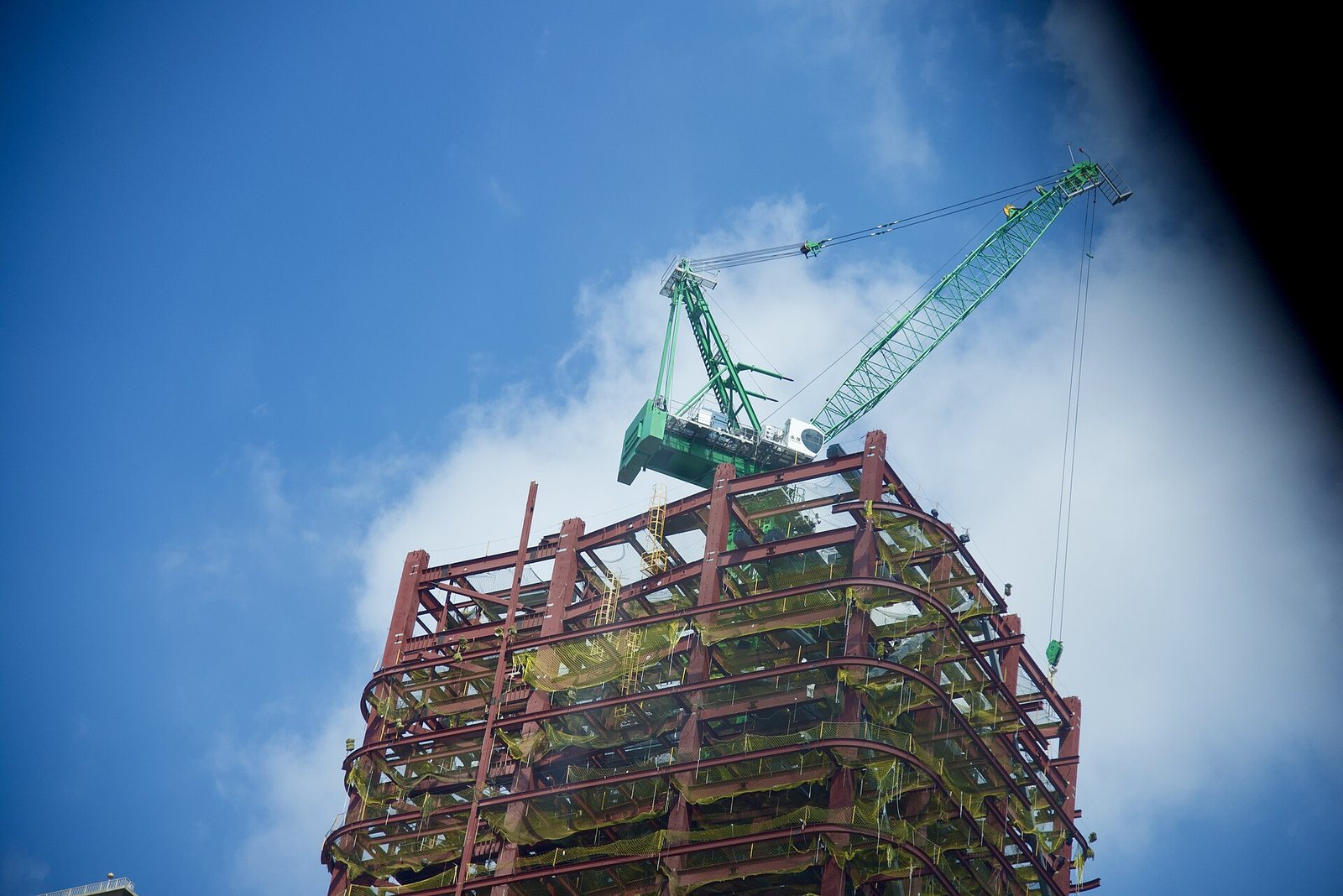
Buildings, cars, rail, ships
Steel frame building under construction… · CC0 via Wikimedia Commons

Il s'agit d'un exemple traité. Il suit une quantité de départ déclarée à travers des rendements et des taux de récupération typiques publiés, de sorte que les proportions sont vérifiables ; ce n'est pas le relevé d'un envoi spécifique. Les données d'itinéraire — quels pays, quels procédés, et pourquoi le matériau ne peut simplement pas être traité ailleurs — sont compilées à partir de sources publiques.

Matériaux

Tous les matériaux Minéraux critiques Terres rares Matériaux de batteries Minéraux menants Tableau périodique Filtre de sélection

Le sous-sol

Mines et gisements Traitement et affinage Pays Cartes

L'économie

Parcours de garde à vue Chaînes d'approvisionnement Marchés finaux Technologies Entreprises Calculateur de matériaux

Apprendre

ApprendreGlossaire Interroger les donnéesAgents IA Recherche et donnéesAPI ouverte Actualités★ Enregistré

À notre sujet

À notre sujetContact MéthodologieSources des données Politique éditoriale Politique de confidentialitéConditions d'utilisation Avertissement