Rock to product, traced
The Materials Atlas
Materials Mines & deposits Processing & refining Custody journeys Supply chains Companies Countries News
Materials by shelf Battery Materials Rare Earth Elements Copper & Electrical Semiconductor Materials Nuclear Materials Aerospace & Defence Precious Metals Steel & Alloy Metals Industrial Minerals Agricultural Minerals Energy Raw Materials Ore minerals Periodic table
Demand End markets Technologies Material calculator Maps Screener
Learn & tools LearnGlossary Ask the DataAI agents Research & dataAPI ★ Saved
About About usMethodology Data sourcesContact Disclaimer
Reading options
🧭 Guided View New to this — ore grades, concentrate, refining, by-products? We explain every term as you browse, in plain English. Same data, with the help built in.
⚡ Expert View You already know the industry. Just the data — clean, fast and compact, with no extra explanations. This is the default view.
Theme
Interface language
Depth Material pages are written at four levels. Pick one on any material page and it is remembered.
★ Saved Research & data

Custody journey · starts in China

Southern Chinese clay to the dysprosium that lets a magnet run hot

Grades under a tenth of a percent, and almost the only heavy rare earths on the market.

1,000 tonnes of clay in the hillside
15 kg of dysprosium oxide
China → Germany China — Leaching the hill in place 1 China Germany — A motor that can get hot 2 Germany
Numbered in the order the material travels. Click a country to open its page. Equirectangular projection drawn from country centroids — the arcs show which borders are crossed, not the actual sailing route.

What is actually moving

Heavy rare earths do not come from a conventional orebody. They come from weathered granite where the metal ions cling loosely to clay, and they are recovered by washing a salt solution through the hillside. The grade is tiny; the strategic weight is enormous.

The material
Dysprosium
The variety
Ion-adsorption clay, very low grade, unusually rich in heavy rare earths
Where it starts
China — Weathered granite hills in Jiangxi, Guangdong and Fujian
Why this route and not another. In these clays the rare earths are adsorbed onto clay surfaces rather than locked in a crystal, so a simple salt solution displaces them. That is why a deposit at 0.05% can be economic when a hard-rock deposit at ten times the grade is not. No comparable heavy-rare-earth resource is in commercial production elsewhere.
The narrowest link. This is the chokepoint. Dysprosium and terbium have essentially one source region and one separation industry.
Read the two numbers on each step: what went in, and what came out. Watching them shrink is the point. By the end you will have followed a thousand tonnes of rock down to a few kilograms of the thing that actually does the work.

Step by step, and border by border

01 Extraction 800kg

China · Jiangxi and Guangdong held by State-consolidated producers (State producer)

Leaching the hill in place

Ammonium sulfate solution is injected into the weathered granite and collected downslope. The rare-earth ions swap places with ammonium on the clay and come out in solution. Nothing is blasted and, in modern practice, little is dug.

1,000 tonnesclay at ~0.05–0.2% REO 800 kgmixed rare earths in solution

What happened to the rest: Older, uncontrolled in-situ leaching left serious groundwater and slope-stability damage, which is much of why the industry was consolidated under state control.

Why here: This deposit type needs a specific granite, a specific climate and millions of years. It is not a matter of looking harder elsewhere.
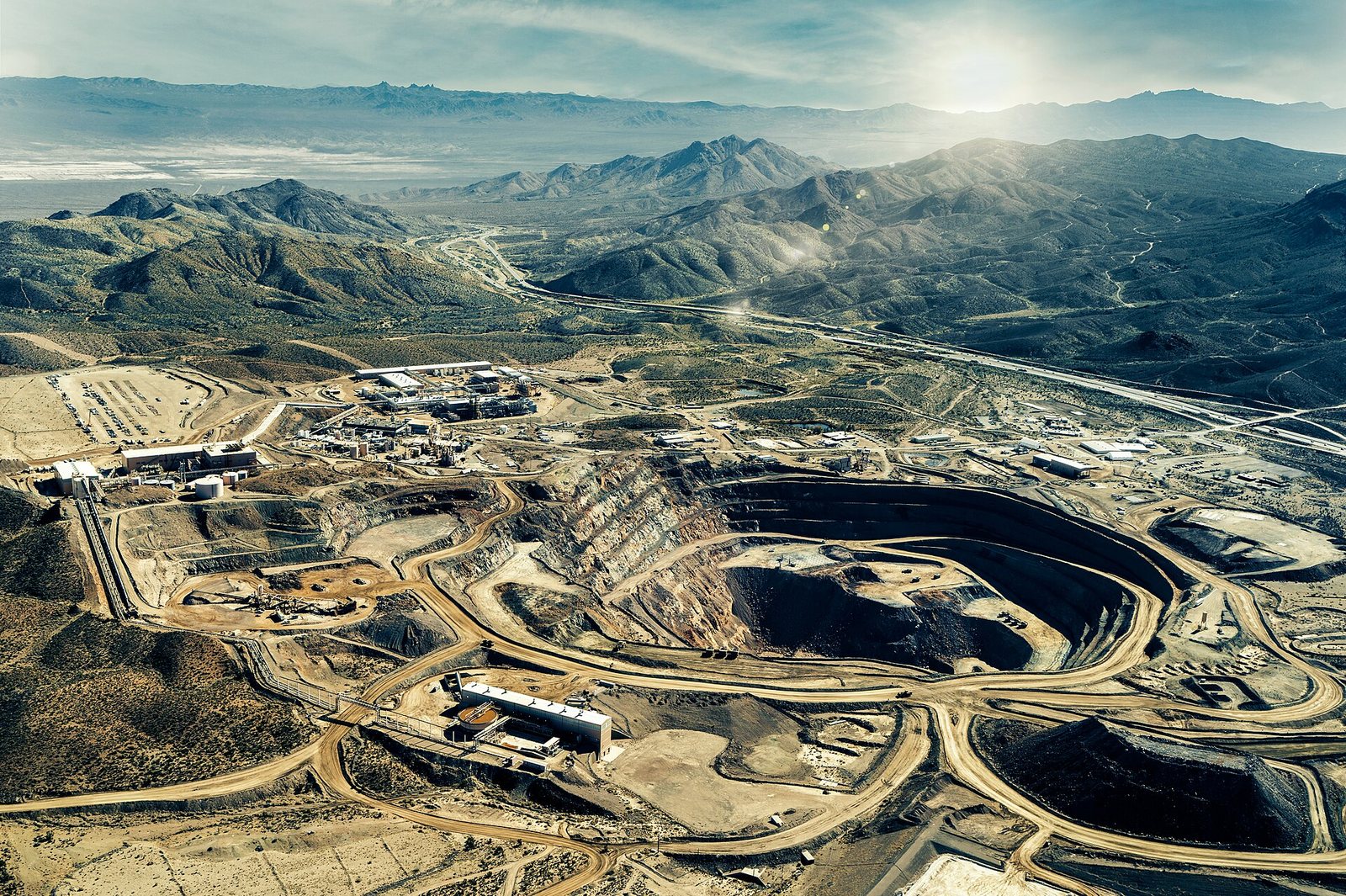
Leaching the hill in place
Mountain Pass Rare Earth Mine & Process… · CC BY-SA 4.0 via Wikimedia Commons
02 Processing 800kg

China · On site held by Producers (Chemical)

Precipitating a mixed carbonate

The pregnant solution is precipitated into a mixed rare-earth carbonate — the intermediate everything downstream starts from.

800 kgmetal in solution 800 kgmixed carbonate

Why here: Concentrating before transport, as always.
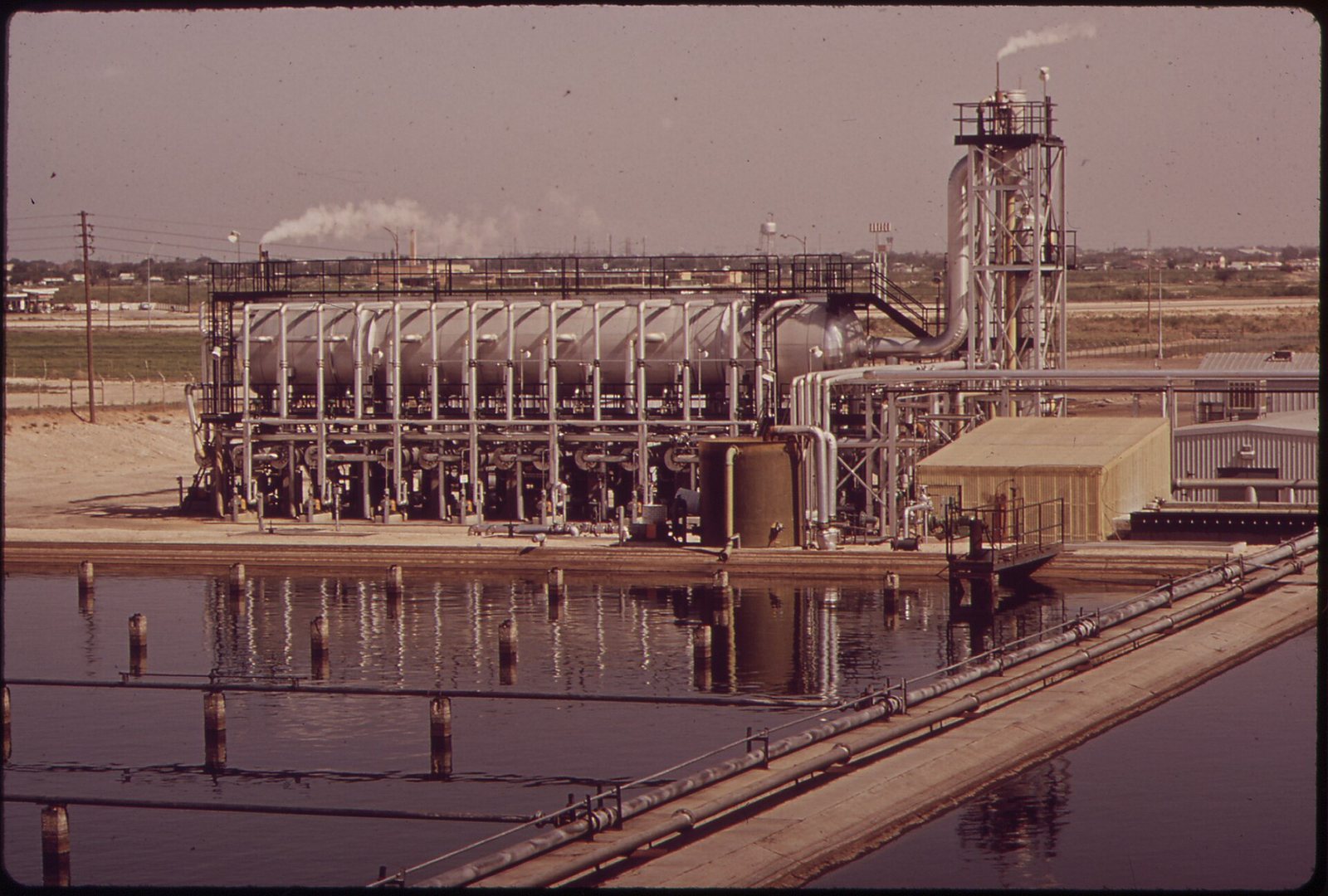
Precipitating a mixed carbonate
COOLING TOWERS AND SETTLING TANKS FOR R… · Public domain via Wikimedia Commons
03 Refining 15kg

China · Ganzhou, Jiangxi held by China Rare Earth Group and affiliates (Refiner)

Separating the heavies

Solvent extraction, but far harder than for the light rare earths: dysprosium, terbium, holmium and erbium are even more alike than neodymium and praseodymium, so it takes more stages and more patience.

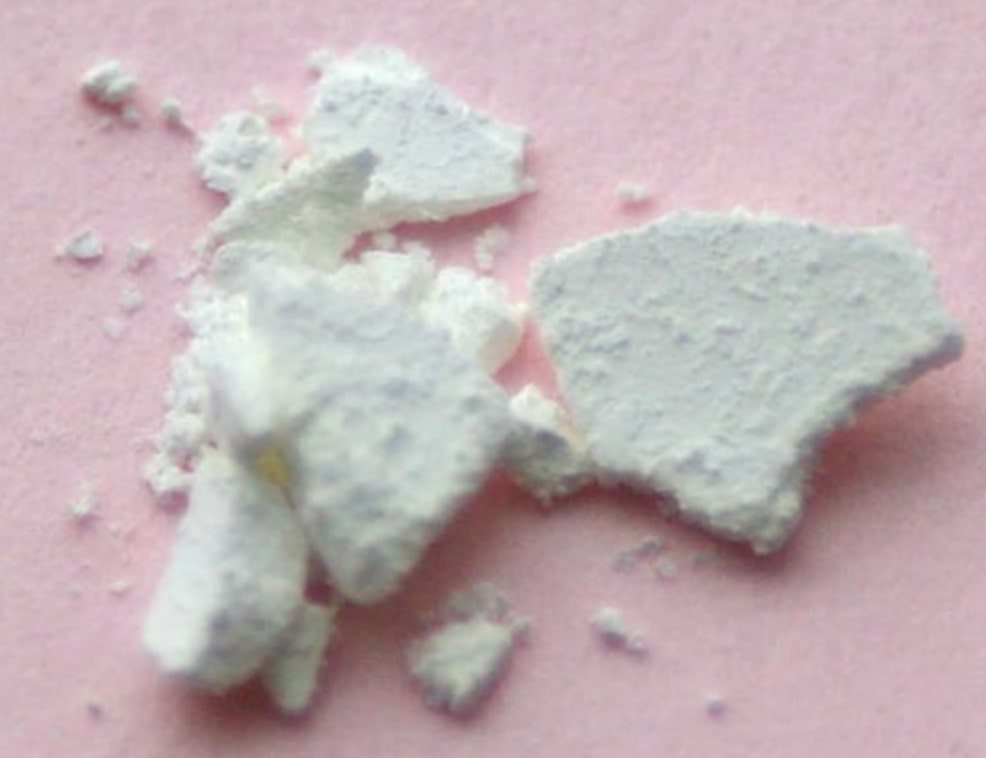
800 kgmixed carbonate 15 kgdysprosium oxide

What happened to the rest: Terbium, yttrium, gadolinium and the rest come out alongside. Yttrium is by far the largest fraction; dysprosium and terbium are the ones everyone actually wants.

Why here: Heavy separation capacity is concentrated here to a degree unmatched by any other material in this atlas.

The road not taken The light rare earths in the same magnet Two routes, two continents, meeting at the magnet press.
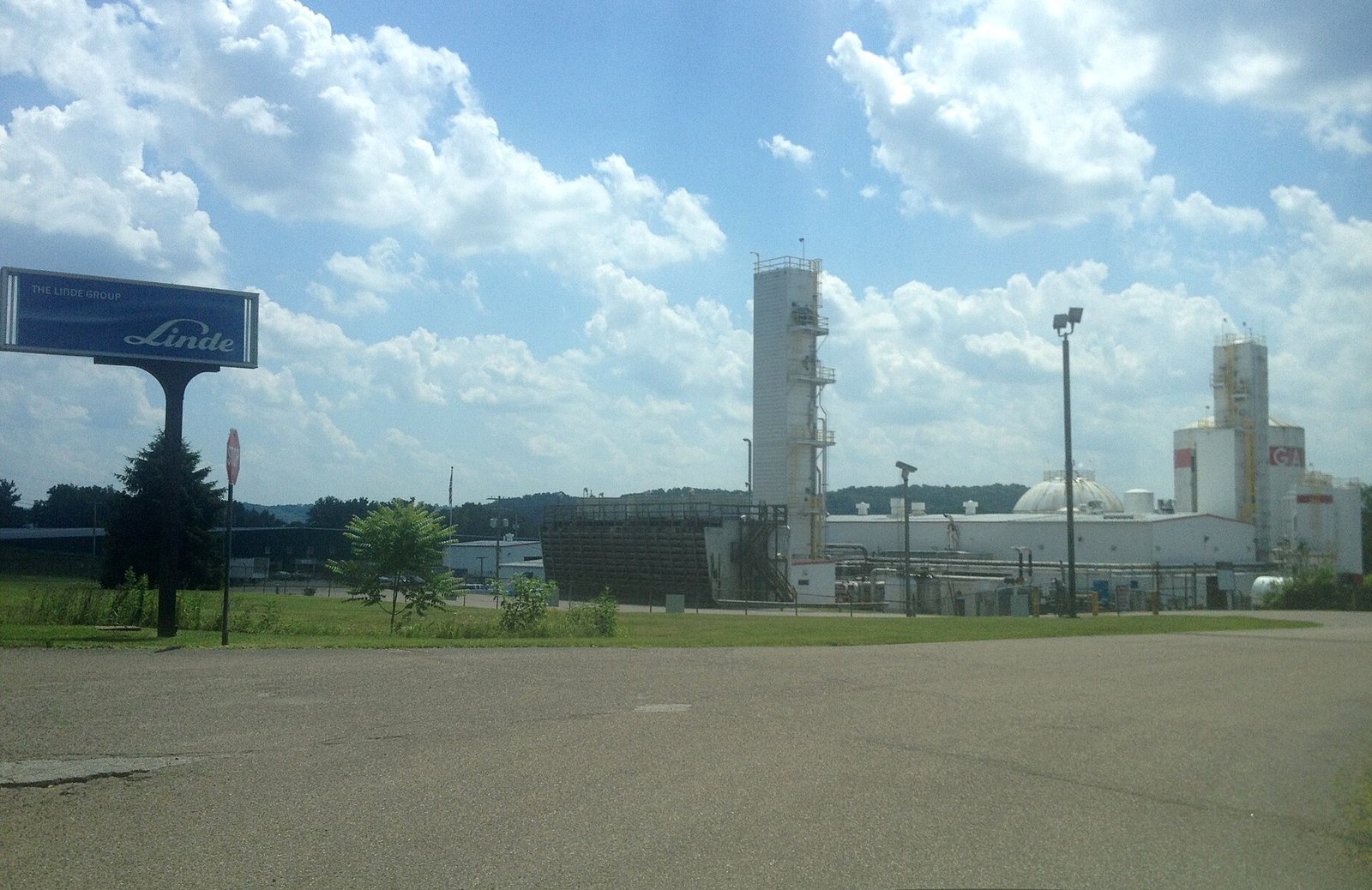
Separating the heavies
Linde (previously AGA) air separation p… · CC BY-SA 3.0 via Wikimedia Commons
04 Component 15kg

China · Magnet plants held by Magnet manufacturers (Manufacturer)

Diffused into a magnet's grain boundaries

Rather than alloying dysprosium throughout the magnet, it is painted on and diffused into the grain boundaries where it does the most good. The technique cut dysprosium use per magnet several-fold.

15 kgdysprosium oxide 15 kgdysprosium in finished magnets

What happened to the rest: This is substitution by engineering rather than by chemistry — same performance, a fraction of the scarce element.

Why here: Grain-boundary diffusion is a process advantage held by a small number of manufacturers.
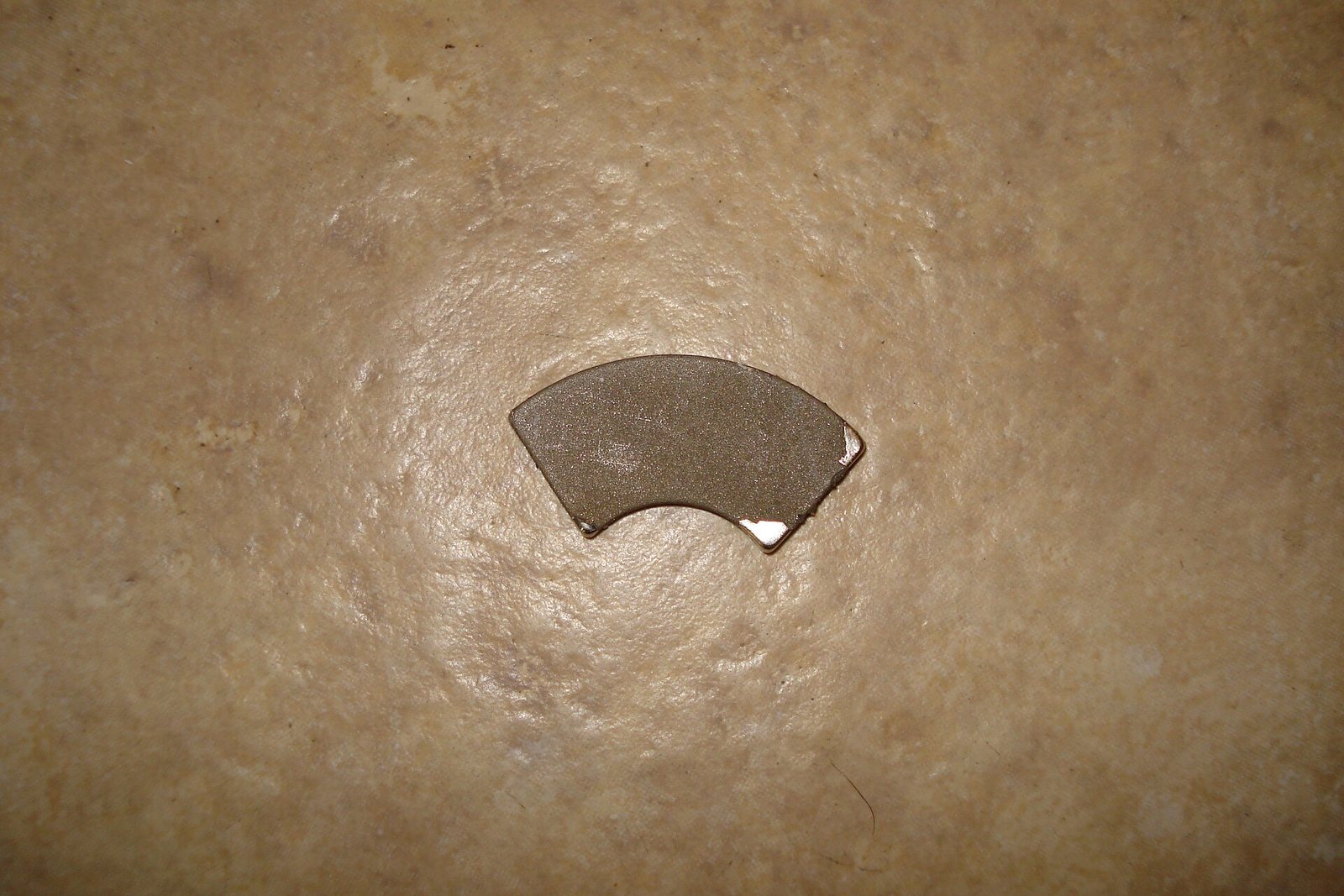
Diffused into a magnet's grain boundaries
Neodymium magnet - 19-11-2010.JPG · Public domain via Wikimedia Commons
05 End market 15kg

Germany · Traction motors and turbines held by Motor manufacturers (Manufacturer)

A motor that can get hot

Without dysprosium a neodymium magnet begins losing strength around 80 °C. A traction motor or a turbine nacelle routinely runs hotter than that. 15 kg is enough for several thousand car motors.

15 kgdysprosium 15 kgin service

Why here: A few kilograms of a metal from a Chinese hillside is what lets an electric motor survive a summer traffic jam.
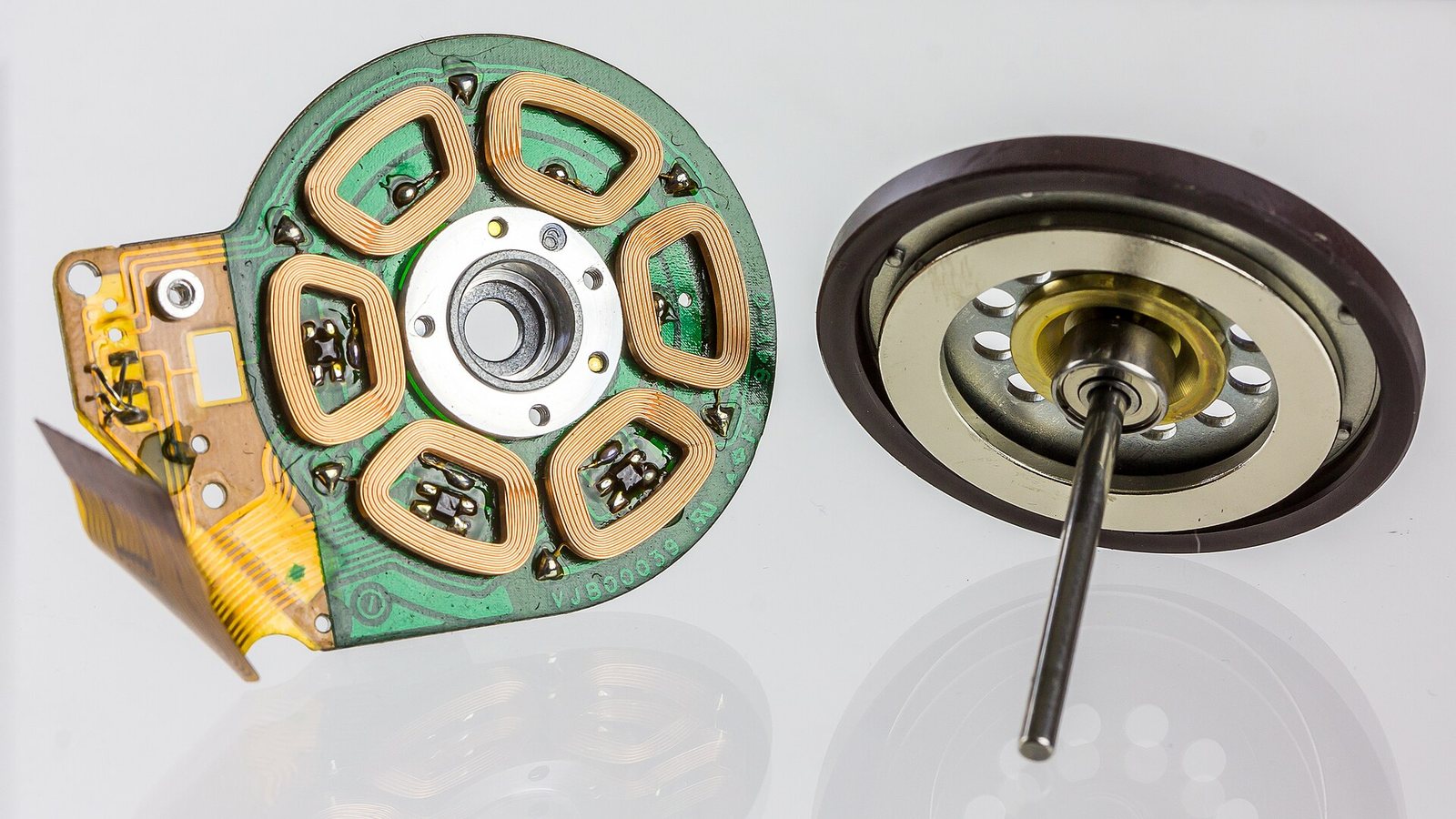
A motor that can get hot
Blaupunkt CR-4500 - drive unit - tape D… · CC BY-SA 4.0 via Wikimedia Commons

This is a worked example. It follows a stated starting quantity through published typical yields and recoveries, so the proportions are checkable; it is not a record of a specific shipment. Route facts — which countries, which processes, and why the material cannot simply be handled somewhere else — are compiled from public reporting.

Materials

All materials Critical minerals Rare earths Battery materials Ore minerals Periodic table Screener

The ground

Mines & deposits Processing & refining Countries Maps

The economy

Custody journeys Supply chains End markets Technologies Companies Material calculator

Learn

LearnGlossary Ask the DataAI agents Research & dataOpen API News★ Saved

About us

About usContact MethodologyData sources Editorial policy Privacy policyTerms of use Disclaimer